

A friend of mine sold a small flat in Pune last year and put the entire amount into a single retail shop near a new metro line. Everyone around her said she was mad. She wasn’t. Her rent doubled. That one decision is, honestly, the whole article in miniature. So let’s talk about which property is best for investment in India and why the answer depends less on the market and more on you.
Why This Actually Matters
Property in India isn’t just an asset—it’s a family decision, a retirement plan, and sometimes even a status symbol. But which property is best for investment in India? Get the category wrong, and you’re stuck with a house nobody wants to rent, or worse, a shop that sits empty for eighteen months while EMIs quietly eat your savings. Get it right, and it becomes the one investment that keeps paying you back, year after year, without much drama. Whether you’re choosing between residential and commercial real estate, understanding which property is best for investment in India can help you maximize returns and minimize risk in 2025.
What It Really Is (Concept Explained Simply)
Residential property is homes, flats, villas, the kind of place someone actually lives in. Commercial property investment covers offices, shops, warehouses, the kind of space a business rents to run itself. Think of it like this: residential is renting to a person’s life, commercial is renting to a person’s livelihood. Businesses tend to pay more, stay longer, and treat the space more carefully than a typical tenant. That difference alone explains most of what follows.
How It Works, Step by Step
Start with your budget. Residential entry points are lower, often ₹40 lakh to ₹1 crore, and home loans are easier to get, with tax deductions attached. Commercial usually needs ₹1 crore or more, and financing is stricter.
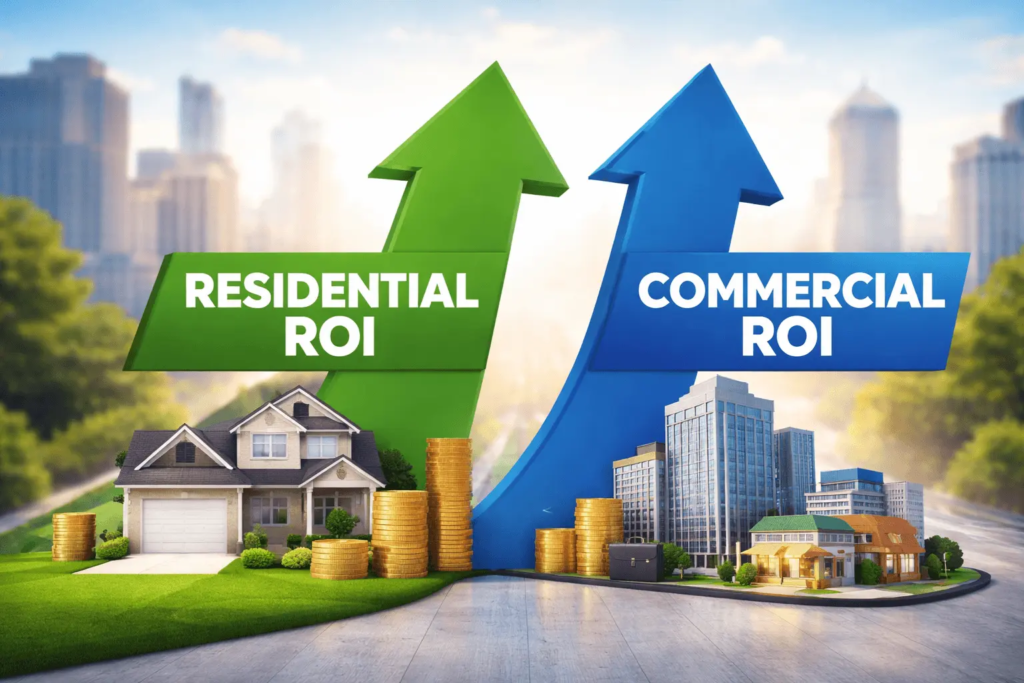
Next, check the rental yield, meaning annual rent divided by the property’s price. According to Global Property Guide’s late 2026 data, India’s average residential gross rental yield sits around 5.09 percent nationally, with Delhi and Kolkata performing best. Commercial properties, by contrast, are routinely delivering 6 to 9 percent, and prime retail in cities like Bengaluru and Hyderabad can touch 9 to 10 percent, per multiple industry trackers this year.
Then weigh liquidity. Selling a flat takes weeks. Selling a shop or office can take months, sometimes longer, because the buyer pool is smaller.
Finally, factor in policy. The Union Budget for 2026-27 introduced income tax relief allowing two self-occupied residential properties instead of one, which is a real, practical nudge toward buying a second home.
Real-World Examples
Take a 2BHK in a Tier-2 city like Indore, priced around ₹60 lakh, renting for ₹18,000 a month. That’s roughly 3.6 percent gross yield, before maintenance. Now take a small retail unit near an IT park in Gurugram, priced at ₹1 crore, renting for ₹65,000 monthly. That’s 7.8 percent gross, and the tenant often pays the maintenance too. Same capital range, almost double the return, but also double the vacancy risk if that business shuts down.
Mistakes People Keep Making, and Why
People buy commercial property because a relative made money in it once, without checking footfall or the tenant’s business stability. Others buy residential purely for “safety” and then wonder why the rent barely covers the loan interest. Neither mistake is stupid, they’re just decisions made on emotion instead of numbers. It happens to smart people too.
Pro Tips That Actually Help
Don’t chase the highest yield blindly. A vacant commercial unit earns zero, and vacancies in commercial real estate can stretch for months. If you’re wondering which property is best for investment in India, the answer depends on your financial goals, budget, and risk appetite. If you’re new to real estate investment in India, residential property helps build confidence and steady cash flow first. If you already own a home and want higher rental income, commercial property—or even a listed REIT for smaller capital—is worth exploring. Ultimately, understanding which property is best for investment in India will help you make a smarter long-term investment decision.
Closing Thoughts
There’s no universal winner here, no, that’s too simple a way to put it. It’s really about matching the asset to your temperament. Some people sleep better with a tenant who’s a family. Others prefer a business lease with a five-year lock-in and don’t mind the wait between tenants. Know which one you are before you sign anything.
Frequently Asked Questions
Q1. Which property is best for investment in India right now, residential or commercial?
Residential suits beginners and those wanting steady, lower-risk income with easier financing. Commercial suits investors with larger capital who want higher rental yields and can tolerate longer vacancy periods.
Q2. What is a good rental yield in India in 2026?
Residential yields of 3 to 5 percent are considered healthy. Commercial yields of 6 to 9 percent are typical for prime locations.
Q3. Is commercial property riskier than residential?
Generally yes. Higher entry cost, longer vacancy periods, and dependence on business cycles make commercial property more volatile, though the returns often justify the risk for experienced investors.
Q4. Can I invest in commercial real estate with a small budget?
Yes, through Real Estate Investment Trusts, which let you invest in commercial-grade assets with much smaller capital and still earn regular payouts.
Q5. Does location matter more for commercial or residential property?
Both, but commercial property is far less forgiving. A shop one street away from footfall can underperform badly, while residential demand is more evenly spread across a neighbourhood.