
Working remotely sounds fun until it eats up your boundaries of personal and professional life. Thousands of professionals today are suffering because they do not get enough time for themselves or their families. Time management has the biggest role to play when it comes to working remotely.
A professional enjoys a structured environment, when it comes to the office, but when it is about home, these barriers do break, and all that suffers is either their health or their family or both & in the absence of a professional setting, time can either become an ally or the biggest challenge.
Today we’ll explore various time management hacks for you to take charge of your workday and make remote work truly efficient.

Work on self-awareness first, then build a schedule
Before you start building a routine or planning your day, know and understand how you’re currently spending your time. What are the things that are eating up most of your time, and how productive or important it is? The number of breaks that you’re taking, if they are necessary or not or if are they placed at the wrong time slot.
You’ll be surprised to know how much time you’re wasting, in the quick phone checks, snacking, or scattered multitasking. Use time-tracking tools like: “Toggl” to know how you are utilizing your time.
Once you know that, plan & build a routine that you can follow religiously. Even though work timings are flexible, you must keep by completing those first.
Write them down physically somewhere, whether in your notebook, on a sticky note, or your whiteboard, it creates a tangible reminder of your goals and keeps you anchored throughout the day.
Don’t waste your morning hours.
Morning hours are the most crucial ones and are the most productive. Do not waste time thinking, about what to do and what not to do, plan or prepare the to-do list a day prior, so that you know what you need to do when you first sit in the morning. Imagine wasting the first few hours trying to figure out only what needs to be done. It even impacts overall performance. People who plan their day prior are considered more productive.
Have a fixed “start-up ritual” that transitions you into the work mode, whether it is clearing the desk, or reviewing your task list.
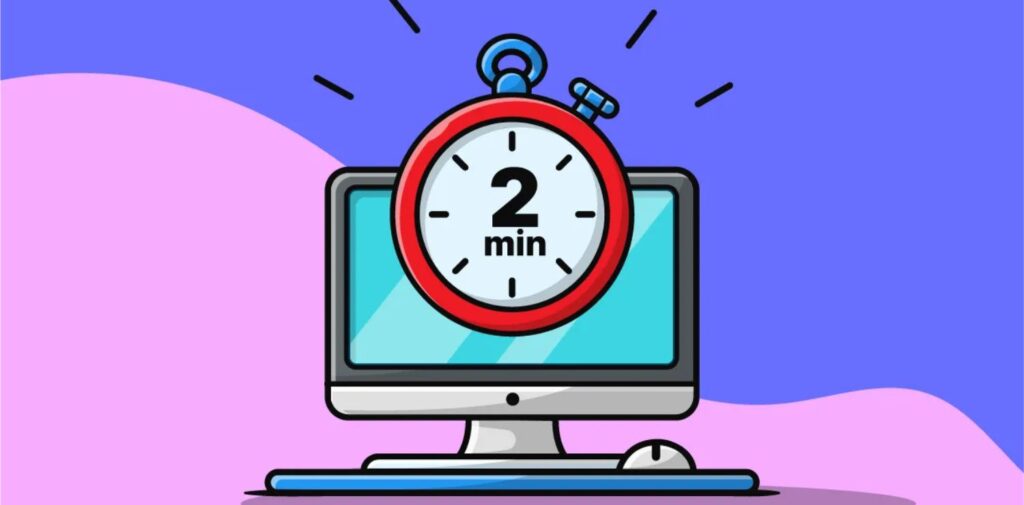
Move forward with the two-minute rule.
If a task takes less than two minutes to be performed – do it immediately, be it scheduling a meeting sending a mail, or a communication to be made. Leaving these “2-minute tasks” for later piles them up and there are chances you might even forget to do it.
This rule is important, especially for those people who procrastinate. It helps to complete tasks on time.
Set “no meeting hours”
For your brain to perform high-value tasks, requires focus. Continuously getting into meetings, do not let your brain get into the focus zone. It stays distracted with scattered topics.
The best hack for this is to set a fixed time for meetings, not engaging in it at odd hours. Block your calendar proactively. Your working hours are fixed. You can even use the Pomodoro Technique (25 minutes of focused work, followed by a 5-minute break). It is a great way to maintain momentum.
Use the Big Three rule.
Do not just start working abruptly, know what are the three major agendas, the most important ones, which when completed would give major progress. List down 20- 30 items that need to be done, and then pick up the major 3, and start.

Don’t waste All of your time.
Leaving buffer time in between the tasks gives you time to think, reset, and explore. Staying scheduled all the time, won’t give you that space. Your brain needs time to transition between the tasks.
Create time blocks in between the tasks where you’re giving yourself the time to think, it even prevents burnout.
Final Thought
It is indeed hard to follow a schedule, but all it takes is discipline. The flexible work culture has indeed given professionals a bit of relaxation but it has turned itself into a challenge as it has blurred all the boundaries of personal and professional life.
Hence, here time management comes into play, without which one can lose a hand on productivity and become prone to burnout.
As discussed above, tracking, planning, perform within set time intervals, is the only healthy way to move forward in today’s fast-paced life. Learn to extract a little bit of time for yourself. Because if you don’t, you’ll find yourself lost somewhere in this rat race.