
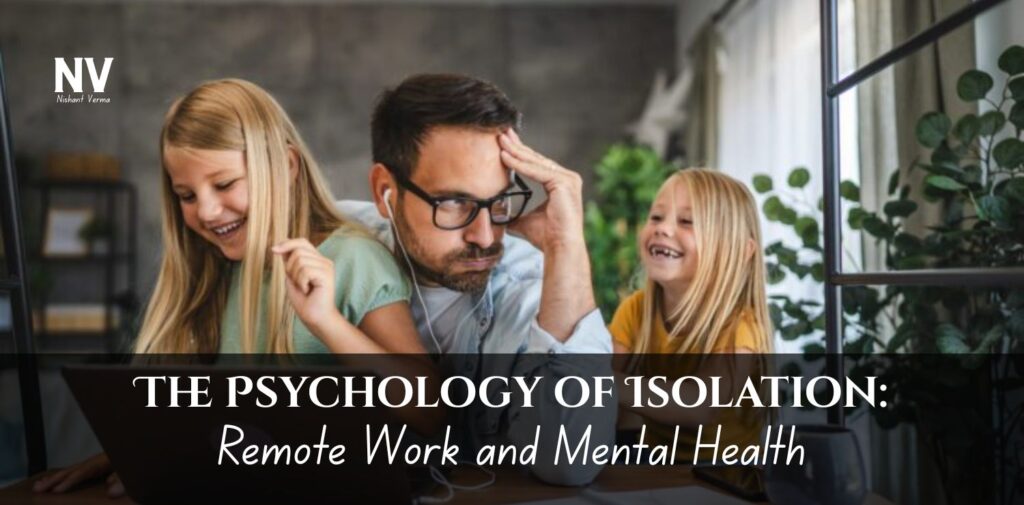
Working from home has brought its own set of benefits for working professionals, the comfort of not commuting daily, flexibility, and cost saving, but something big comes along with it is a big challenge: “isolation”. It is a silent battle that remote workers have been fighting. Faces on screen aren’t helpful, there is a lack of human connection, and it takes a significant toll on mental health.
Initially, working from home does feel like freedom, but it takes away all the socializing that you used to do while you were working in the office. Social interactions are very natural in an office setting, during lunch breaks, and during coffee breaks. All of it gets stripped away and can lead to depression, anxiety, and burnout. In this article, let’s explore the ways to deal with isolation.

Impact of Isolation
1. Lost Sense of Belonging – Since people are bound to connect online in a work-from-home setting, there’s a lack of space to build a connection, so people tend to feel different from their peers and the organization. When working in the office, you interact face-to-face, build a community, and make a team with shared goals, ideas, and experiences.
2. Poor Work-Life Balance – It is noticed in the work-from-home setup that employees overwork, they do not have boundaries, and they log in and log off at very odd hours. They are never fully disconnected from the office. It disrupts their work-life balance and causes stress and fatigue.
3. Communication Gaps – Virtual connections have helped us connect to people living far away. It has made work easier. However this often leads to a lack of face-to-face communication. There is an increased scope of misunderstandings, a lack of immediate feedback, and there is a huge inability to read the body language, which can often lead to frustration.
4. Increased Anxiety and Depression – Humans are social creatures; they cannot live long in isolation. Lack of face-to-face interaction can cause anxiety. They even tend to perform well when surrounded by people. Its lack often causes emotional instability.
What are the signs of loneliness?
1. Prolonged feeling of sadness
2. Feeling disconnected from the work
3. Lack of motivation or enthusiasm
4. Avoiding interacting with people
5. Difficulty in concentrating on work

What are the possible solutions?
1. Set Boundaries Between Work and Personal Life – Do not stay available 24/7, set dedicated timelines, and log off properly. It then leaves space for your personal life. Try connecting to people during that time. Socialize more. This will help you maintain a balance.
2. Schedule Regular Check-Ins – It is important to check in with your team, not merely for work, but on a personal level, make a habit of checking in about their well-being as well.
Connect through video calls, on,-camera can bridge an emotional gap and make you feel connected.
3. Communicate Transparently – If feeling disconnected, express it. Encourage your team to collaborate more, and engage in open communication and non-work activities. It will help you understand your fellows better and build relationships.
4. Practice Mindfulness and Self–care – Practice meditation, journaling, it will help you combat anxiety, and if you go out for a jog or gym, it will help you connect to people in person, promoting disconnect from digital screens and reducing mental strain.
5. Attend Webinars and Virtual Workshops – Engage yourself in activities other than just work to connect more with people and even gain more knowledge. It’s a great way to meet people in your industry
6. Find a co-working space – If you’re struggling with isolation, consider joining a local co-working space a few times a week. It will make you feel working from the office itself without sacrificing your flexibility.
7. Keep Your Camera on During Calls – Seeing faces gives a sense of connection. People today try to move with the camera off during meetings, which doesn’t help much. Practice overcommunication, in remote settings, it is better to share more. Keep your teams constantly updated. It keeps you connected and visible.
Final Thoughts
Isolation isn’t something that comes easily, nor does easily. It sets in because of some continuous series, and it does take some time to go away. You would have to make efforts to come out of that phase because it’s quite depressing. Go out, meet people, if not possible, practice the ways discussed above, and it will bring a drastic change.
You’re not alone fighting this battle. But only a few take steps to get out of it. Start now, and you will feel the change.