
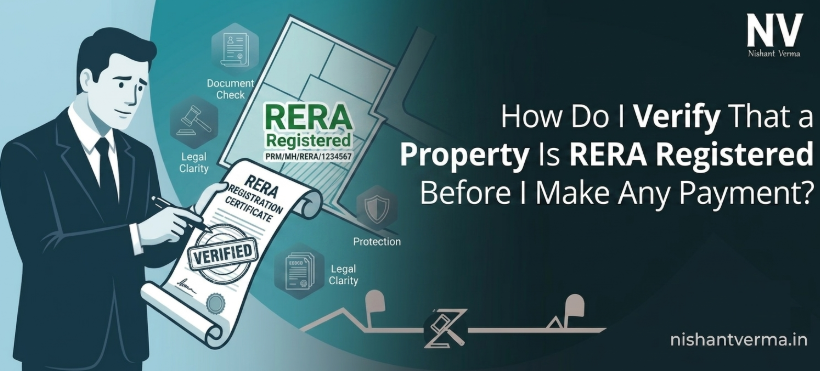
There is a particular kind of silence that happens in a broker’s office right before you sign a cheque. Everyone is smiling. The floor plan looks perfect. And somewhere in the back of your mind, a small voice asks: is this RERA registered property, or am I about to hand over my savings on trust alone? That question, uncomfortable as it feels in the moment, is the one that actually protects you.
Why This Actually Matters
Buying a home or a plot is probably the single largest payment most people will ever make. And yet, so many buyers still skip the one check that takes less than five minutes: confirming the project is a genuine RERA registered property. Skip it, and you’re relying entirely on the builder’s word. Verify it, and you suddenly have legal recourse, a project timeline on record, and a way to check where your money is actually going. This isn’t paperwork for the sake of paperwork. It’s the difference between a home and a headache.
What RERA Registration Really Is
Think of RERA, the Real Estate Regulatory Authority, as a public ledger that every serious real estate project is supposed to sit in. No hiding, no vague promises. A RERA registered property comes with a RERA registration number, project timelines, carpet area details, and the builder’s track record, all visible to anyone who looks. If a project doesn’t have this number, no, that’s not quite right, let me put it more plainly, if a project cannot show you this number when asked, that’s your first red flag. Not a small one either.
How To Verify RERA Registration, Step by Step
Here is the actual process, the one that should happen before any token amount changes hands.
- Ask the builder or dealer directly for the RERA registration number. A legitimate seller of a RERA registered property will produce it without hesitation.
- Visit your state’s official RERA website. Each state runs its own portal, so Haryana buyers, for instance, use RERA Haryana, while Maharashtra buyers use MahaRERA.
- Search the project name or the registration number on the RERA website and cross check the builder’s name, project address, and possession date against what you’ve been told.
- Look at the property verification documents listed there, including approved layout plans and land title status.
- Check for any complaints or penalties logged against the builder. This part often gets skipped, but it tells you more about builder compliance than any brochure ever will.
- Confirm the sanctioned area matches what’s being sold to you. Discrepancies here are more common than people assume.
Each of these steps takes minutes, not days. There’s really no excuse to skip them, especially not for a decision this size.
Real-World Examples
Consider a buyer in Faridabad who was quoted a launch price for what was pitched as a RERA registered property, only to find, on checking the RERA website, that no registration existed at all. The “society” existed only in a sales brochure. Or take the more reassuring case, a Hisar-based buyer who confirmed the RERA registration number, saw the possession date matched what the dealer promised, and proceeded with confidence. Same city, same market, very different outcomes, because one person paused to check and the other didn’t.
Mistakes People Keep Making
Most buyers don’t skip verification out of carelessness. They skip it because the process feels intimidating, or because trust in a familiar broker feels easier than reading government portals. Understandable. Still costly. Some common mistakes: accepting a photocopy of a certificate without cross checking it online, assuming that if a project is being sold near a known landmark it must be legitimate, and confusing a project’s RERA application with actual approval. An application pending is not the same as a RERA registered property, and that gap in builder compliance has caught out more buyers than people realise. Always insist on seeing the final, approved status, not just proof that paperwork was submitted somewhere.
Pro Tips That Actually Help
A quietly useful habit: once you’ve confirmed a RERA registered property, save the RERA registration number and check the portal again closer to your possession date, not just once at the start. Builders occasionally miss their own project deadlines, and the portal often reflects that before word spreads informally. It also helps to compare the registered carpet area with what’s mentioned in your agreement, since builder compliance on paper doesn’t always match what’s marketed. And if a broker seems reluctant to discuss property verification at all, that hesitation is information too.
Closing Thoughts
There’s a quiet urgency to all of this that doesn’t always announce itself. Nobody warns you, when you’re standing in that builder’s office, smiling at floor plans, that the real protection was sitting on a government website the whole time, waiting to be checked. It takes so little effort, really. Just a name, a number, a few minutes of looking. Somewhere between excitement and caution is where good decisions get made, and verifying a RERA registered property is exactly that kind of small, unglamorous act that saves people from very large regrets.
FAQs
Is it necessary to check RERA registration even for resale properties?
Yes, though the rules differ slightly. Older resale properties may predate RERA, but any project launched after RERA came into effect should still be checked on the RERA website for compliance history.
What if the builder refuses to share the RERA registration number?
Treat that as a serious warning sign. A legitimate RERA registered property has nothing to hide, and refusal to share this number is reason enough to walk away.
Can a project be partially RERA registered?
Sometimes only certain phases of a large project are registered. Always check whether the specific unit or tower you’re buying falls under the registered phase.
Does RERA registration guarantee the builder won’t delay possession?
No, but it gives you documented recourse and a clear timeline to hold the builder accountable to, which is far more than an informal promise offers.
Is property verification only about RERA, or should I check other documents too?
RERA is a strong starting point, but title deeds, encumbrance certificates, and approved layout plans still matter and complete the full picture.
Disclaimer: This article is for general informational purposes only and does not constitute legal or financial advice. Buyers should verify project details independently through official RERA portals and consult a qualified legal professional before making any property-related payment.