
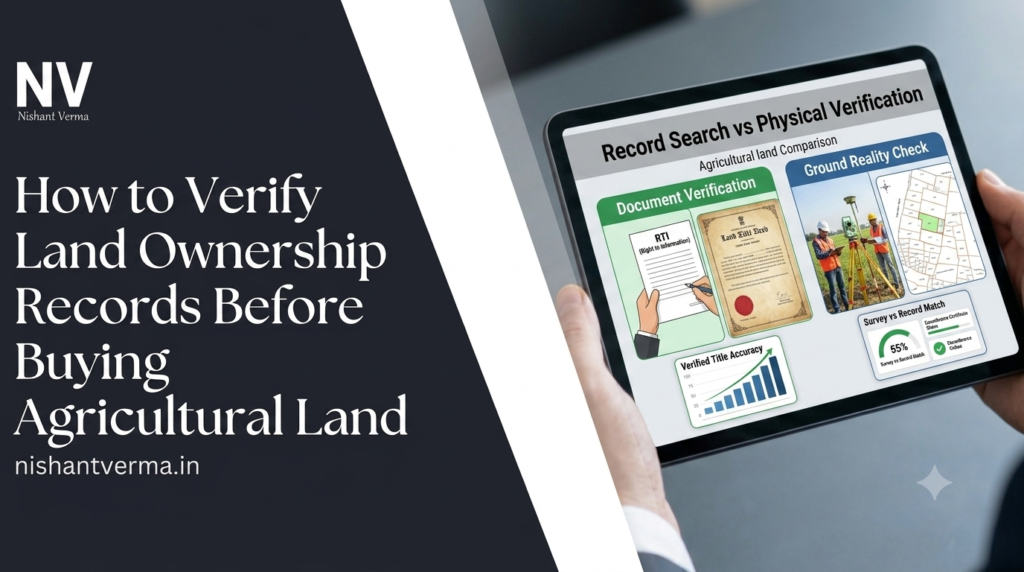
There’s a particular kind of trust people place in agricultural land deals that they’d never place anywhere else. A neighbour vouches for the seller. The land has “always belonged to that family.” Nobody asks for paperwork because, well, everyone in the village already knows the story. And that’s exactly where things go wrong, because knowing a story and having verified land ownership records are two very different things.
Why This Actually Matters
Agricultural land, more than almost any other kind of property, tends to pass through generations without formal registration keeping pace. Land gets divided among siblings informally, disputes get resolved verbally, and old land ownership records and revenue records often lag behind reality by years. If you don’t verify land ownership records before paying, you risk buying land that’s jointly owned by five cousins who haven’t agreed to sell, or worse, land that’s already under litigation. Verify land ownership records properly, and you know exactly whose name is on the title, how the land has changed hands, and whether it’s actually free to sell.
What Land Ownership Records Really Are

Land ownership records are the official revenue documents maintained by the state government that show who holds legal rights over a piece of agricultural land. These typically include the 7/12 extract (in Maharashtra), khata and khatauni records (in states like Uttar Pradesh and Bihar), jamabandi (in Punjab and Haryana), or RTC (Record of Rights, Tenancy and Crops) in Karnataka. Each of these documents lists the current owner’s name, survey or khasra number, land classification, and any loans or encumbrances registered against it. If a seller can’t produce these, or the name on record doesn’t match theirs, that’s not a minor detail to overlook.
How to Verify Land Ownership Records, Step by Step
Here is the actual process to follow before any advance payment is made:
- Ask the seller for the current land record extract — the 7/12, khatauni, jamabandi, or RTC depending on your state — along with the survey or khasra number.
- Visit your state’s official land records portal. Most states now host these online, such as Bhulekh, Bhoomi, or the respective state revenue department website.
- Search using the survey number or owner’s name to pull up the current record and confirm it matches what the seller has told you.
- Check the mutation history, which shows every change in ownership over time, including inheritance, sale, or gift transfers.
- Confirm there’s no pending litigation or dispute flag attached to the survey number, which many portals now display directly.
- Verify the land classification matches its actual use — agricultural land sold for non-agricultural purposes often needs separate conversion approval before any construction or resale.
- Cross-check for joint ownership. If the land is held by multiple family members, ensure all legal heirs have consented to the sale, not just the person you’re dealing with.
Each of these checks is available in some form on your state’s revenue portal, and most take only a few minutes once you have the survey number.
Real-World Examples
Consider a buyer in Nashik who was ready to pay an advance on a plot of agricultural land, only to discover, on checking the 7/12 extract, that the land was still jointly recorded under four siblings, only one of whom was negotiating the sale. Without that check, he would have paid a deposit to someone with no full authority to sell.
Compare that to a buyer near Karnal who requested the jamabandi record as a first step, confirmed the seller’s name matched the current owner exactly, and saw no pending mutation disputes, allowing the deal to close smoothly and confidently.
Same category of land, same region, entirely different risk exposure, because one buyer paused at the record and the other almost didn’t.
Mistakes People Keep Making
Most buyers don’t skip this step out of carelessness. They skip it because agricultural land deals often happen through informal, community-based trust, and asking for government records can feel like an accusation. Some common mistakes:
- Relying on an old copy of the land record instead of pulling the current one online
- Assuming a single family member’s word is enough consent for the whole family’s land
- Not checking whether the land classification allows the intended use, especially if any non-agricultural purpose is planned later
An outdated extract can look perfectly clean while hiding a recent, unresolved mutation. Always pull the latest record directly from the portal rather than trusting a printed copy handed to you.
Pro Tips That Actually Help
- Always cross-check the survey or khasra number across at least two sources — the physical document and the online portal — since manual records can occasionally be out of sync.
- If the land has multiple legal heirs, insist on a no-objection certificate from each of them before proceeding.
- Keep a dated screenshot or printout of the online record at the time of your check, since portal data can be updated later.
- Where the portal shows a court case or dispute marker, treat it as a hard stop until a lawyer reviews it, not a detail to negotiate around.
Closing Thoughts
Agricultural land deals often move at the pace of trust and familiarity, which is exactly why they need a little more scrutiny, not less. The record sitting quietly on a government portal doesn’t care how long a family has farmed that land or how convincing the story sounds. It simply tells you who legally owns it today. Spending a few minutes verifying land ownership records before any payment is one of those small, unglamorous habits that can save you from a dispute that outlasts the harvest by years.
Frequently Asked Questions
What is the difference between 7/12 extract, khatauni, and jamabandi?
They serve the same purpose — recording land ownership and rights — but are named differently by state. The 7/12 extract is used in Maharashtra, khata/khatauni in states like Uttar Pradesh and Bihar, and jamabandi in Punjab and Haryana.
Can I check land ownership records online for any state?
Most states now offer online land record portals, though coverage and update frequency vary. It’s still advisable to confirm the online record against the physical copy at the local revenue office where possible.
What if the land is jointly owned by multiple family members?
You’ll need consent, ideally in writing, from every legal heir listed on the record before proceeding, since a sale by only one co-owner can later be challenged by the others.
Does a clean land record gua#antee no future disputes?
No, but it significantly reduces the risk. A clean, current record confirms there’s no registered claim or litigation at the time of checking, though it’s worth rechecking closer to your final payment date.
Do I need a lawyer to verify land ownership records?
Not for the initial online check, but it’s strongly recommended to have a lawyer review the mutation history and any conversion or classification documents before finalizing the purchase.