

Buying a home in India used to feel like signing a blank cheque and handing it to a stranger. Developers could delay projects by years, shift layouts without asking, or quietly move your money into an entirely different construction site. Buyers had little recourse. The courts were slow, the contracts were lopsided, and the dream of homeownership often became a prolonged, exhausting dispute.
That changed when the government answered a question millions of buyers had stopped asking: what is RERA in real estate, and why did it take so long?
What Is RERA in Real Estate, Explained Simply?
RERA stands for the Real Estate (Regulation and Development) Act, 2016. Introduced by the Government of India to bring order to a chaotic industry, RERA made real estate transparent, trackable, and most importantly, accountable. It came into force in May 2017 and applies to every developer, agent, and project above a defined size threshold.
Understanding what is RERA in real estate starts with one core idea: before this law, the developer held all the cards. A family could book a flat in 2013 and still be waiting for possession in 2019. No penalties, no binding timeline. Just vague promises on glossy brochures.
Why This Law Matters More Than Most Buyers Realise?
Before RERA, developers could collect funds and divert them to other projects, often leaving buyers in limbo. The RERA Act is about creating a transparent and buyer-centric real estate ecosystem and its actual provisions deliver on that in measurable, legal ways.
For anyone putting their life savings into property, knowing what is RERA in real estate is not optional. It is the starting point of every safe purchase.
How RERA Registration Works: The Core Framework?
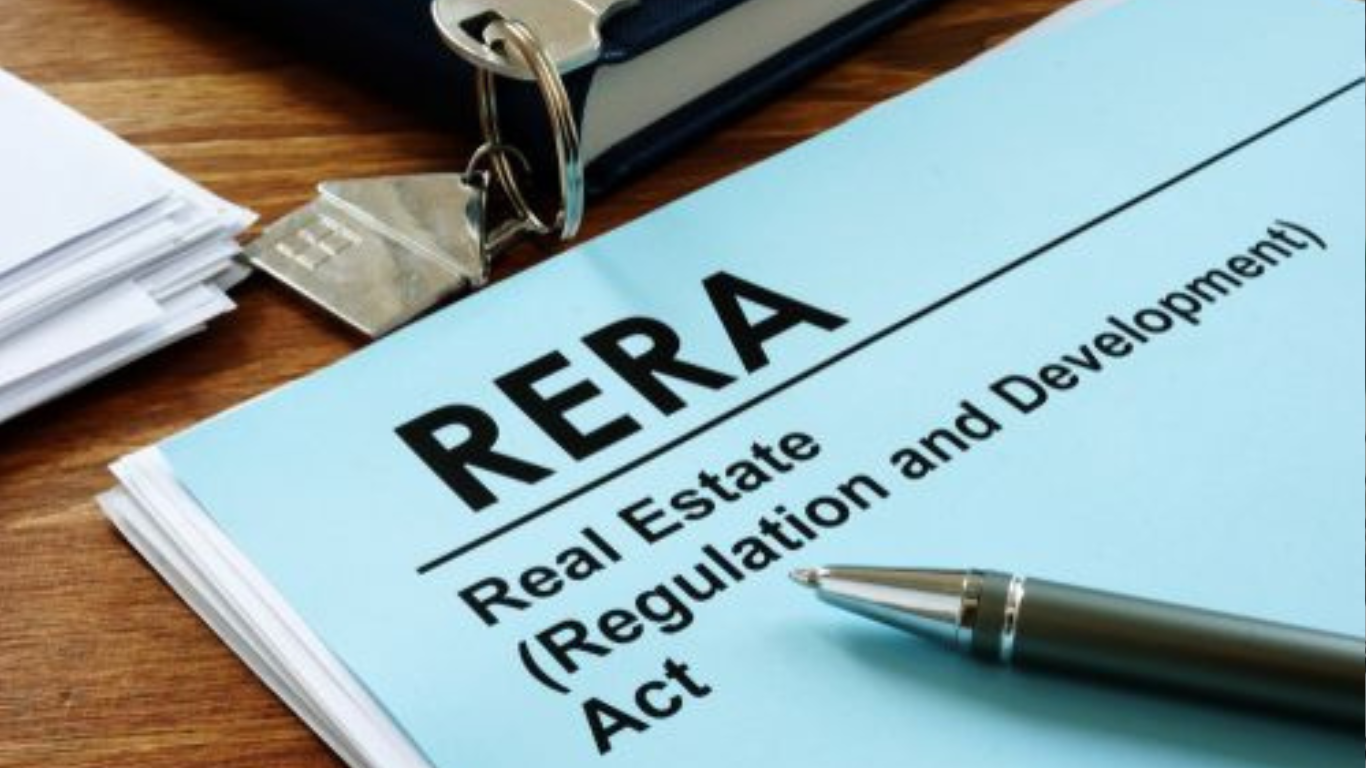
All projects above 500 sq. metres or with more than 8 apartments must be registered with the state RERA authority before advertising or selling. Each registered project gets a unique RERA registration number. Builders must display this number on all advertisements. Without it, marketing a project is a legal offence.
Once registered, the developer must publicly disclose layout plans, land ownership status, approvals, construction timelines, and promoter history. Buyers can verify all this on their state’s RERA portal before spending a single rupee.
The 70:30 Rule: Your Money Cannot Be Misused
One of the strongest provisions is the 70:30 escrow rule. Developers must deposit 70 percent of the funds collected from buyers into a dedicated RERA account, which can only be used for land cost and construction expenses of that specific project. This single rule eliminates the biggest fraud in pre-RERA real estate. Your money stays tied to your project.
Delays, Defects, and Your Right to Compensation
This is where RERA gets sharp. In case of delay, buyers receive monthly interest at 2% above SBI’s MCLR as compensation. Cancellation entitles the buyer to a full refund with interest. Developers are also legally bound to fix any structural or workmanship defect for five years after possession.
If the builder makes false promises and the regulatory authority finds a difference between advertisement and delivery, the buyer may get a full refund of their advance, sometimes with interest.
Carpet Area vs. Super Built-Up: A Change That Saved Lakhs
Before RERA, builders priced flats on “super built-up area,” a number that included lobbies, staircases, and shared walls. Buyers paid for space they never used. RERA enforces a fair payment structure, ensuring that developers can only charge buyers based on the carpet area, the actual usable space, instead of the misleading super built-up area.
How to Verify a Project Is RERA-Registered ?
Visit your state RERA website (MahaRERA for Maharashtra, UP RERA for Uttar Pradesh, HRERA for Haryana). Enter the project name or RERA number. The RERA number is a unique registration number assigned to each project upon successful registration, confirming it is RERA-approved and enabling buyers to check project details online.
Never book based on a brochure alone. Always verify.
What RERA 2.0 Changed in 2025?
The 2025 amendments, referred to as RERA 2.0, introduce stronger compliance standards for developers and agents, including tighter project monitoring and higher penalties for non-registration or misinformation. Builders must now upload quarterly statements of all withdrawals from escrow accounts, and buyers can attend RERA hearings virtually through an online case tracking system.
By May 2025, MahaRERA had surpassed 50,000 registered projects, representing approximately 35% of all RERA registrations in India.
Mistakes Buyers Still Make

Many buyers trust verbal commitments from sales staff and sign booking forms without checking the RERA certificate. Others skip verifying whether their broker is RERA-registered. All agents and brokers must register with RERA and provide accurate information about themselves, the projects they handle, and their commissions. An unregistered agent is not a small oversight. It is a legal red flag.
The second common mistake: ignoring the possession date in the sale agreement. Under RERA, that date is legally binding. It is not an estimate.
Closing Thoughts
RERA did not make real estate perfect. Enforcement varies across states, and implementation in smaller regions can still be uneven. But it gave buyers something they never had before: legal standing. The right to information. The right to compensation. The right to walk away with their money. For a country where millions of families invest decades of savings into a single flat, that is everything.
So before you sign anything, check the RERA registration number. That one step takes ten minutes. It could save you years.
Read More: Deal Acres
FAQ
Q1. What is RERA in real estate in simple terms?
RERA, or the Real Estate (Regulation and Development) Act, 2016, is a central law that regulates property developers and agents in India. It mandates project registration, enforces escrow-based fund management, and gives buyers the right to compensation for delays or broken promises.
Q2. Is every property in India covered under RERA?
RERA applies to residential and commercial projects above 500 sq. metres or with more than 8 units. Smaller projects and pure resale transactions between individuals generally fall outside its direct scope.
Q3. How do I file a RERA complaint against a builder?
Visit your state RERA portal, fill out the complaint form, attach documents like your sale agreement and payment receipts, and pay the required fee. Complaints are to be resolved within 60 days under Section 31.
Q4. Can a builder change my flat’s layout after booking?
No. Under Section 14 of RERA, layout or design changes require buyer consent. Unauthorized changes are a punishable offence.
Q5. Does RERA protect buyers of resale flats?
RERA primarily governs new or under-construction projects. Resale flat transactions between individual buyers and sellers are generally outside its direct purview, though the agent facilitating the deal must still hold a valid RERA registration.
Q6. What is the RERA registration number and why does it matter?
It is a unique identifier assigned to every RERA-registered project. It lets buyers verify on the official state portal that the project is legally compliant, with all timelines, approvals, and financial disclosures filed and publicly accessible.