You check your website analytics. Four hundred visitors last month. Maybe five hundred. The numbers look decent. You feel like something is working.
Then you check your inquiry form. Three submissions. Two of them spam.
This is one of the most quietly frustrating problems a real estate agent can face. Traffic without conversions. Visibility without trust. A website that looks active but functions like an empty showroom.
The problem is almost never the traffic. It is what happens the moment a visitor lands on your page and tries to answer one silent question: “Can I trust this person with one of the biggest financial decisions of my life?”
If your website cannot answer that question within the first few seconds, they leave. No inquiry. No call. Just another bounce.
Read More: How to Effectively Manage a Cross-Functional Team
Why Real Estate Website Visitors Leave Without Contacting You
Most real estate websites in India are built to look professional. Clean design, property listings, a contact form somewhere at the bottom. That is table stakes. It is not enough.
A buyer researching a 2 BHK in Noida Expressway or a resale flat in Dwarka Expressway is not just looking for listings. They are looking for someone they can trust. Someone who knows this market, has done this before, and will not waste their time or money.
Real estate website conversion fails most often because the website talks about properties but says almost nothing about the person behind it. And in real estate, the person is the product.
According to research on consumer behaviour in high-value purchases, buyers need multiple trust signals before they take action. In real estate, where a single transaction can involve ₹50 lakh to several crores, that threshold is even higher. A generic website with stock photos and a contact form does not clear it.
What Brand Messaging Actually Means for a Property Agent

Brand messaging is not a logo or a colour scheme. It is the answer to a question every visitor asks the moment they land on your site: “Who are you, and why should I trust you with this?”
Most real estate websites answer that question with something like: “We are a trusted real estate company with years of experience.” That sentence could describe ten thousand agents. It describes no one.
Effective brand messaging for real estate is specific. It names the market you know. It names the type of buyer you serve. It shows evidence of past work. It sounds like a person, not a brochure.
Compare these two homepage headlines:
“Welcome to Nishant Verma Real Estate. We help you find your dream home.”
Versus:
“I have helped 200 families buy and sell property in Gurgaon and Noida over the last 11 years. If you are buying on Dwarka Expressway or Noida Expressway, I can tell you what the portals will not.”
The second version creates immediate credibility. It is specific. It implies expertise. It makes a promise a generic agency cannot make. That is brand messaging doing its job.
Read More: Evolution of Business Management in the 21st Century
Trust Signals That Actually Convince Buyers to Inquire
Trust signals are the elements on your website that reduce a visitor’s hesitation. They are proof points. And in real estate, they carry enormous weight.
The most effective ones, in order of impact, are these.
Client video testimonials placed prominently on the homepage. Not written reviews buried in a tab. Short video clips where a real buyer explains their experience in their own words. A 60-second genuine video from a Sector 50 Gurgaon buyer does more than any professional copywriting.
A detailed author or agent bio with specifics. Years of experience, localities covered, number of transactions, any media mentions or certifications. Vague bios breed vague trust.
Google reviews visible on the site. Embedding your Google My Business reviews directly on your website connects your online reputation to your web presence. Buyers check both separately anyway. Showing them together saves the step and builds confidence.
Case studies or transaction stories. Not just “we sold a flat in Noida.” A short paragraph: “A couple came to me looking for a 3 BHK under ₹90 lakh near Sector 137. Here is what we found, what we negotiated, and what they paid.” That kind of specificity is rare. It earns attention.
Real photos. Of you. In the localities you claim to know. Standing outside a project. Sitting across from a client. Stock images of handshakes and skylines actively reduce trust for buyers who are doing serious research.
Why Your CTA Is Probably Failing (And How to Fix It)
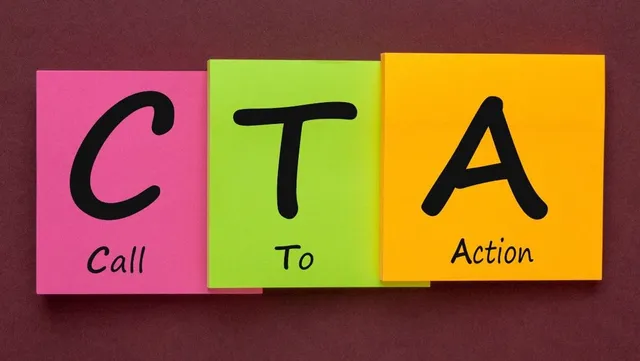
A call to action is not just a button that says “Contact Us.” That is the most passive, lowest-converting phrase on the internet.
Buyers at different stages of their research need different invitations. Someone who just discovered your website and is three months away from buying does not want to “Contact Us.” That feels like commitment they are not ready for.
Give them something smaller. “Download the Dwarka Expressway Locality Guide.” “Get this month’s price update for Noida Sector 137.” “Watch my 10-minute honest review of Greater Noida West before you decide.”
These micro-conversions bring someone into your world without asking for too much too soon. Once they are on your WhatsApp list or email list, you can nurture the relationship until they are ready to call.
The hard CTA, the “Book a Call” or “Schedule a Site Visit,” should exist for buyers who are clearly in decision mode. Put it after your testimonials. After your case studies. After they have seen enough evidence to believe you. Not at the top of a cold homepage.
Read More: Impact of Employee Training on Business Management
The Mistake That Kills Conversion on Most Property Websites
The single most common error is a website that is entirely listing-focused with no person visible anywhere on it.
Listings are interchangeable. Portals have millions of them. If a buyer lands on your site and sees only property cards, there is no reason to contact you specifically. They will go back to 99acres or MagicBricks where the selection is larger.
Your website’s job is not to compete with portals on inventory. It is to make the case for why you, specifically, are the right advisor for this buyer’s situation.
The second most common mistake is hiding the inquiry options. Forms buried below the fold, phone numbers in tiny text in the footer, no WhatsApp button visible on mobile. Buyers who are ready to reach out will not hunt for your contact details. If it takes more than three seconds to find how to contact you, many simply will not.
Mobile optimisation is not optional. A significant portion of property research in NCR happens on phones, often late at night when someone is quietly comparing options. If your website loads slowly or displays poorly on a phone screen, that visitor is gone.
Small Changes That Noticeably Improve Real Estate Website Conversion
Rewrite your homepage headline to be specific about who you help and where. Cut “trusted advisor” and “dream home.” Add a number, a locality, a type of buyer.
Move one strong client testimonial, preferably a video embed, to the top half of your homepage. Do not make visitors scroll to find social proof.
Add a low-commitment CTA alongside your main one. “Not ready to call? Get my free NCR locality guide” captures buyers who are interested but not yet ready for a conversation.
Make your phone number and WhatsApp link visible and clickable on every page, especially on mobile. Add a sticky contact bar at the bottom of mobile screens.
Write one honest, specific blog post about a locality you genuinely know well. Link it from your homepage. It demonstrates expertise in a way no headline can replicate.
Read More: Building a Culture of Innovation in Your Organization: A Simple Guide for Indian Businesses
Closing Thought
A website that gets traffic is not the same as a website that earns trust. And in real estate, trust is the only thing that converts.
The agents seeing strong real estate website conversion rates in Gurgaon and Noida are not necessarily the ones with the most polished sites. They are the ones whose websites make a visitor feel something specific: this person knows what they are talking about, they have done this before, and they will not waste my time.
That feeling does not come from design. It comes from specificity, evidence, and a clear message about who you are and who you serve.
The traffic is already there. The question is whether your website is ready to meet it properly.
Frequently Asked Questions
Why is my real estate website getting traffic but no inquiries?
The most common reason is a lack of visible trust signals. Visitors need to see who you are, what you have done, and why you are qualified before they will reach out. A website with only listings and a generic contact form does not answer those questions.
What is the most important trust signal on a real estate website?
Client video testimonials placed prominently on the homepage have the highest impact. They show real people vouching for your work in their own words, which is significantly more credible than written reviews or agent self-description.
How do I write a better call to action for my property website?
Match the CTA to the buyer’s stage. Offer something low-commitment for early-stage visitors, such as a locality guide or price report. Reserve the direct “Book a Call” CTA for pages where a visitor has already seen enough evidence to trust you.
Does website design affect real estate inquiries?
Design matters for first impressions, but it is secondary to content and trust signals. A simple, fast-loading website with strong testimonials, a clear bio, and specific messaging will outperform a beautifully designed site that says nothing meaningful about the agent.
How can I improve my real estate website conversion rate without rebuilding the whole site?
Start with three changes: rewrite your homepage headline to be specific, move a strong testimonial above the fold, and make your WhatsApp or phone number visible and clickable on every page. These alone can meaningfully improve inquiry rates.
Should my real estate website focus on listings or on me as an agent?
Both, but in the right order. Lead with who you are, your expertise, your market knowledge, and your track record. Then show your listings as evidence of your active presence in that market. Portals already win on listing volume. Your website wins on trust and personal credibility.
Nishant Verma is a real estate advisor based in NCR with over years of experience in the Gurgaon and Noida property markets. He specialises in mid-segment and luxury resale and has advised 200+ homebuyers across Dwarka Expressway, Noida Expressway, and Greater Noida West. Visit nishantverma.in for locality guides, market updates, and honest property advice.