
Running a business in India, whether small or large, comes with its own set of challenges. One of the most important tools that every business owner should understand is the break-even analysis. This simple yet powerful concept helps you know when your business will start making a profit and how to manage your costs effectively. In this article, we will explain what break-even analysis is, why it is important for your business, how to calculate it, and how you can use it to make smarter decisions.
What is Break-Even Analysis?
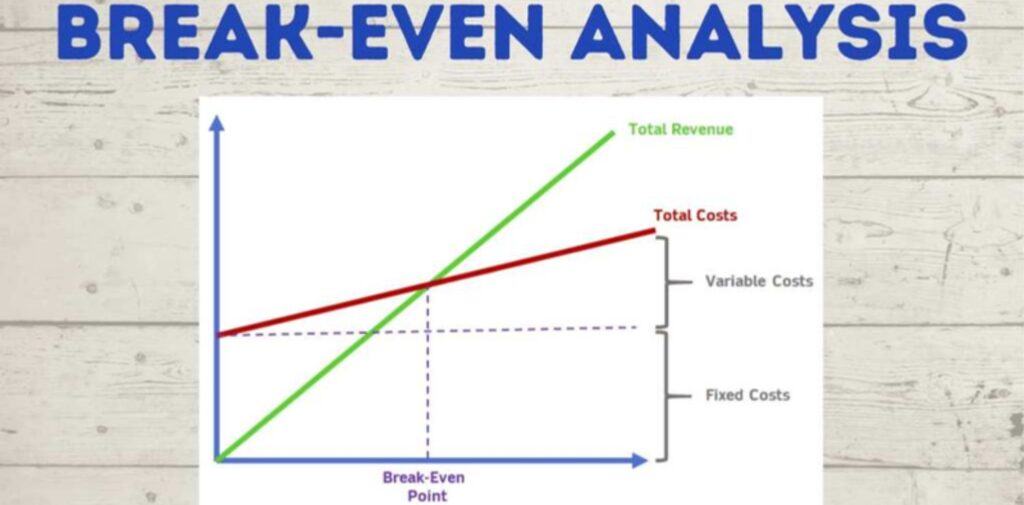
Break-even analysis is a way to find out the point at which your business neither makes a profit nor incurs a loss. This point is called the break-even point. At this stage, your total revenue exactly equals your total costs. This means the money you earn from selling your products or services covers all your expenses, but you are not making any extra money yet.
Understanding this point is crucial because it tells you the minimum amount of sales you need to achieve to avoid losing money. Once your sales go beyond this point, your business starts earning profits.
Why is Break-Even Analysis Important for Your Business?
In the Indian business environment, where competition can be tough and market conditions often change, knowing your break-even point helps you in many ways:
- Planning your sales targets: It tells you the minimum sales volume required to cover your costs.
- Pricing decisions: Helps you set the right price for your products by understanding your costs.
- Cost control: You get insights into your fixed and variable costs, enabling better management.
- Profit planning: You can plan how much you need to sell to reach your profit goals.
- Risk assessment: It helps you understand how much sales can drop before your business starts making losses.
Understanding Fixed and Variable Costs
To do a break-even analysis, you need to understand two main types of costs:
Fixed Costs: These are expenses that remain the same regardless of how much you produce or sell. For example, rent for your shop or office, salaries of permanent staff, electricity bills that do not change much, or loan repayments.
Variable Costs: These costs change depending on the level of production or sales. For instance, the cost of raw materials, packaging, commission to salespeople, or transportation expenses that increase with sales volume.
Knowing the difference between these costs is important because the break-even point depends on how these costs behave as sales change.
How to Calculate the Break-Even Point?
There are two common ways to calculate the break-even point: in units (number of products sold) and in sales value (amount of money earned).
The basic formula for break-even point in units is:
Break-even point (units) = Fixed Costs / (Selling Price per Unit – Variable Cost per Unit)
Here,
- Fixed Costs are total fixed expenses.
- Selling Price per Unit is the price at which you sell one unit of your product.
- Variable Cost per Unit is the cost of producing or selling one unit.
For example, if your fixed costs are ₹50,000, your selling price per unit is ₹500, and your variable cost per unit is ₹300, then:
Break-even point = 50,000 / (500 – 300) = 50,000 / 200 = 250 units
This means you need to sell 250 units to cover all your costs.
To calculate break-even point in sales value, use:
Break-even sales (₹) = Fixed Costs / Contribution Margin Ratio
Contribution Margin Ratio = (Selling Price per Unit – Variable Cost per Unit) / Selling Price per Unit
In the above example, contribution margin ratio is (500 – 300) / 500 = 0.4 or 40%.
Break-even sales = 50,000 / 0.4 = ₹1,25,000
So, your sales revenue should be at least ₹1,25,000 to break even.
How Can You Use Break-Even Analysis to Grow Your Business?
Once you know your break-even point, you can make better business decisions.
- Setting Realistic Sales Goals: You can set targets that ensure you cover your costs and earn profits. For example, if your break-even sales are ₹1,25,000, aim to sell more than this to stay profitable.
- Pricing Strategy: If you find that your break-even point is too high, consider adjusting your prices or reducing costs. For example, negotiate with suppliers to lower raw material costs or find cheaper packaging options.
- Managing Costs: Analyze your fixed and variable costs regularly to find areas where you can save money. Maybe you can move to a cheaper office or reduce unnecessary expenses.
- Planning for Seasonal Business: Many Indian businesses face seasonal demand. Knowing your break-even point helps plan for low-demand months and avoid losses.
- Investment Decisions: When you want to invest in new machinery or expand your business, break-even analysis helps you estimate how much more you need to sell to justify the investment.
Common Mistakes to Avoid in Break-Even Analysis
While break-even analysis is simple, many business owners make mistakes that reduce its usefulness.
- Ignoring Variable Costs: Sometimes, people only consider fixed costs, forgetting that variable costs increase with sales.
- Using Incorrect Prices or Costs: Always use accurate and updated figures for selling prices and costs.
- Not Considering Multiple Products: If you sell different products, calculate break-even points for each or use weighted averages.
- Overlooking Changes in Costs: Costs can change over time, so update your analysis regularly.
- Not Using the Analysis for Decision Making: Knowing the break-even point is not enough; use it actively to plan your business.
In Conclusion
Break-even analysis is a valuable tool for every Indian business owner, big or small. It helps you understand your costs, set sales targets, price your products correctly, and manage risks. By learning and applying break-even analysis, you can run your business more confidently and work towards steady profits. Remember, the key is to know your numbers well and use this knowledge to make smart decisions for growth.
If you haven’t done a break-even analysis for your business yet, now is the perfect time to start. It will give you a clearer picture of your business health and guide you towards success.