

If you have ever wondered how shopkeepers decide the price of things or why some products cost more than others, you’ve probably heard the terms margins and markups. These words might sound confusing, but they are very important when it comes to pricing products — whether you are a business owner or a buyer. This article explains what margins and markups are, how they differ, and why they matter in everyday buying and selling, especially in the Indian context.

What is Margins?
Margins is basically the profit a seller makes when they sell a product. It is the difference between the selling price and the cost price, shown as a percentage of the selling price.
Let’s break it down with an example:
Imagine you buy a pair of shoes for ₹1,000 (this is the cost price), and you sell it for ₹1,500 (this is the selling price). The profit you make is ₹500 (selling price minus cost price). To find the margin, you divide the profit by the selling price and multiply by 100.
Margin (%) = (Profit ÷ Selling Price) × 100
= (₹500 ÷ ₹1,500) × 100
= 33.33%
So, your margin is 33.33%. This means that out of the ₹1,500 you get from selling the shoes, about 33% is profit.
Why is Margin Important?
Margin helps businesses understand how much profit they are making on each sale after covering the cost of buying the product. A good margin ensures the business can pay other expenses like rent, salaries, electricity, and still make money.
For Indian shopkeepers and manufacturers, maintaining a healthy margin is crucial, especially when dealing with fluctuating costs like raw materials or transportation.
What is Markup?
Markup is different from margin, although many people mix them up. Markup is the amount added to the cost price to arrive at the selling price. It is expressed as a percentage of the cost price.
Using the same example:
Cost price = ₹1,000
Selling price = ₹1,500
Profit = ₹500
Markup (%) = (Profit ÷ Cost Price) × 100
= (₹500 ÷ ₹1,000) × 100
= 50%
So, your markup is 50%, meaning you added 50% of the cost price to set the selling price.
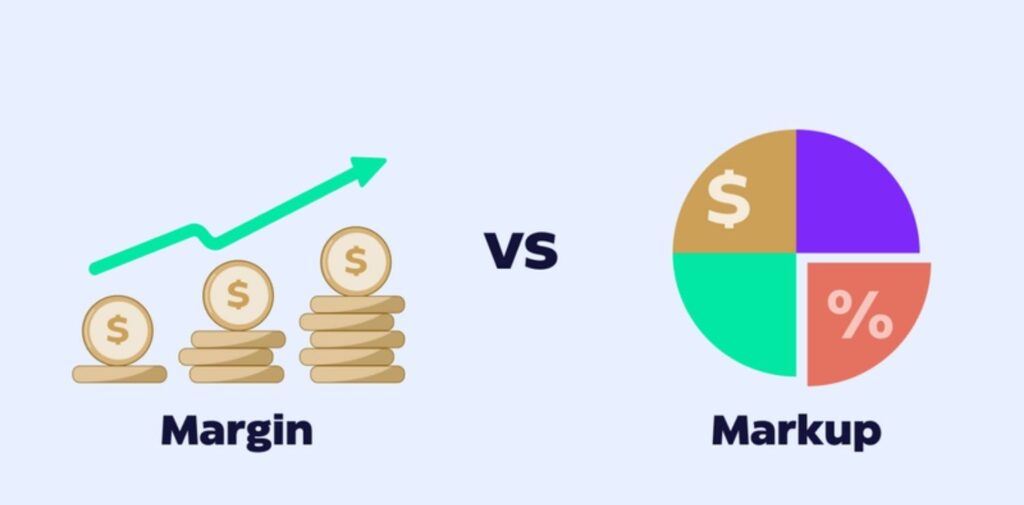
How Markup and Margin Differ
To summarize:
- Margin is profit as a percentage of the selling price.
- Markup is profit as a percentage of the cost price.
Though they sound similar, the percentage values for margin and markup are always different, except when the cost price and selling price are equal (which means no profit or loss).
Why Understanding This Matters to You
For business owners, knowing the difference helps in setting prices correctly so that the business stays profitable. For customers, understanding margins and markups helps in recognizing if the product is priced fairly or if the seller is charging too much.
For example, during festivals like Diwali or wedding seasons, you may notice prices going up. Sometimes, sellers increase markup to cover higher costs or to earn more profit. Knowing how this works can help you negotiate better or shop wisely.
Example from an Indian Grocery Store
Suppose a grocery store buys a packet of rice for ₹40 and sells it for ₹50.
- Profit = ₹10
- Margin = (10 ÷ 50) × 100 = 20%
- Markup = (10 ÷ 40) × 100 = 25%
Here, the store earns a 20% margin and applies a 25% markup on the rice packet. This helps the owner cover costs and make a profit.
Tips for Small Business Owners in India
- Always calculate your cost price correctly, including taxes, transportation, and packaging.
- Decide your markup percentage based on your business expenses and target profit.
- Keep an eye on market prices so you stay competitive.
- Remember, a very high markup can scare customers away.
- A very low markup might not cover your costs, leading to losses.

For Shoppers: How to Use This Knowledge
- When buying from local stores, don’t hesitate to ask about prices or compare with other shops.
- Understand that some markup is normal and needed for the shopkeeper to run the business.
- During sales, check if discounts are genuine or just price adjustments.
- Knowing markup and margin can help you negotiate better, especially in markets and bazaars.
In Conclusion
Margins and markups are simple but powerful tools that help businesses price their products and understand profits. For Indian business owners, mastering these concepts can mean the difference between success and loss. For shoppers, this knowledge empowers you to make smarter buying decisions.
Next time you buy or sell, remember — margins tells you what percentage of the selling price is profit, while markup tells you how much more than the cost price you are charging. Understanding this small difference can save you money and help you grow your business.