
Starting or growing a business in India can be exciting but also challenging, especially when it comes to money. Every business needs funds to develop products, pay employees, market services, and expand. But how do entrepreneurs get this money? There are two popular ways — crowdfunding and traditional business finance. Both have their own benefits and challenges.
In this article, we will explore crowdfunding and traditional business finance in simple language, helping Indian business owners and aspiring entrepreneurs understand which option might suit them better. By the end, you will have clear knowledge to make an informed decision.

What is Traditional Business Finance?
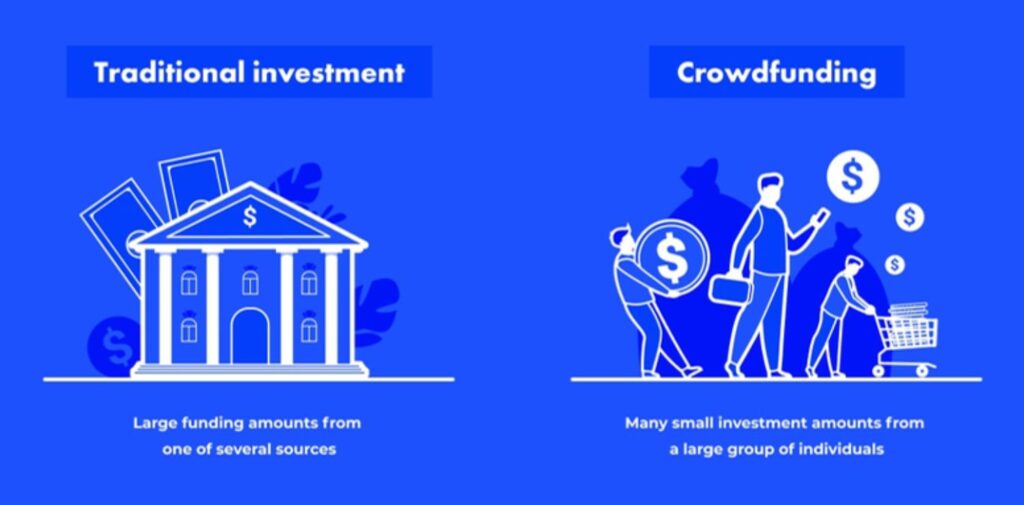
Traditional business finance refers to the usual methods of getting money for a business. This includes bank loans, borrowing from financial institutions, angel investors, venture capital, and sometimes government schemes. In India, most small and medium businesses rely on banks or NBFCs (Non-Banking Financial Companies) for loans.
In a traditional loan, you borrow money with an agreement to pay it back with interest over a certain period. Investors like venture capitalists give money in exchange for some ownership or shares in the business.
This method has been the backbone of Indian businesses for decades. Banks provide loans based on your business plan, credit history, and collateral (something valuable you pledge against the loan). Government programs like the Mudra Loan Scheme and Stand-Up India also help entrepreneurs access funds traditionally.
What is Crowdfunding?
Crowdfunding is a modern and popular way to raise money by collecting small amounts from many people, usually through online platforms. Instead of going to a bank or a single investor, entrepreneurs reach out to a large audience who believe in their idea and want to support it.
Crowdfunding is done mainly through websites like Kickstarter, Indiegogo, or Indian platforms like Ketto, Wishberry, and Milaap. There are different types of crowdfunding:
- Reward-based: Backers get a product or service in return for their support.
- Donation-based: People donate money without expecting anything back, usually for social causes.
- Equity-based: Investors get shares in the company.
- Debt-based: Borrow money from many people and pay them interest over time.
Crowdfunding has grown rapidly in India as internet access expands and more people want to support startups and social causes.
Advantages of Traditional Business Finance
One big advantage of traditional business finance is the amount of money you can get. Banks and investors can provide large sums, which can help your business grow quickly.
Traditional finance also comes with clear legal agreements, which can protect both you and the lender or investor. It can build your credit history, making it easier to get loans in the future.
Many government schemes offer low-interest loans to small businesses, especially startups, women entrepreneurs, and rural businesses. This financial support can be a lifeline.
Traditional finance is familiar and trusted. Many Indian business owners feel comfortable approaching banks and investors because they have done so before or seen others do it.
Disadvantages of Traditional Business Finance
The biggest challenge is the paperwork and approval process. Getting a bank loan in India can take months and requires a lot of documents like business plans, tax returns, collateral proofs, and financial statements.
If you don’t have a strong credit history or collateral, banks may reject your loan application. Also, if your business is risky or new, investors may hesitate to invest.
Interest payments can become a burden if your business is not generating steady income. Missing loan repayments can harm your credit score and even lead to legal issues.
Some investors may want control over your business decisions in exchange for funding, which might limit your independence.

Advantages of Crowdfunding
Crowdfunding opens doors to a wide audience. You can reach thousands of people interested in your product, idea, or cause. This is especially useful for startups or creative projects that traditional banks might not fund.
It is easier and faster to start a crowdfunding campaign compared to bank loans. You don’t need collateral or strong credit history.
Crowdfunding helps you test your idea in the market. If people are willing to support your product, it means there is demand. This feedback can be very valuable before launching a full business.
It creates a loyal community of supporters who can become your first customers and brand ambassadors.
Equity-based crowdfunding gives you a chance to raise funds without giving away control to a single investor but by involving many small investors.
Disadvantages of Crowdfunding
Crowdfunding success depends heavily on how well you market your campaign. If you don’t have good communication or a compelling story, it might fail.
There is no guarantee that you will reach your target amount. Many campaigns fail due to lack of visibility or support.
Managing many small investors or backers can be complicated, especially for equity crowdfunding.
For reward-based crowdfunding, you have to deliver on promises like products or services, which can add to costs and logistics.
Crowdfunding might not provide very large amounts of money for big business expansions.
Which One is Better for Indian Entrepreneurs?
The choice between crowdfunding and traditional business finance depends on your business type, stage, and needs.
If you are starting a small business or a creative project with limited funds, crowdfunding is a good option. It lets you validate your idea and build a customer base without taking debt.
If you need a large amount of money to scale up production, buy machinery, or expand into new markets, traditional finance might be better.
For startups with high growth potential, a combination of both can work well. You can start with crowdfunding to prove your idea and then approach investors or banks with better chances of approval.
Tips for Success in Crowdfunding and Traditional Finance
For crowdfunding, create a clear and attractive campaign. Use videos, pictures, and simple explanations to show why your idea matters. Share your campaign on social media and ask friends and family to support and spread the word.
For traditional finance, keep your documents ready and have a solid business plan. Build good credit by paying dues on time and maintaining transparent accounts. Approach government schemes for better interest rates.
Explore platforms that support Indian entrepreneurs. Many crowdfunding websites and government portals offer resources and guidance to help you succeed.
Final Thoughts
Both crowdfunding and traditional business finance have their unique place in India’s growing business environment. Crowdfunding brings innovation, community, and faster access to funds, while traditional finance offers larger amounts and trusted processes.
Understanding your business needs, financial capacity, and growth plans will help you choose the best method. Sometimes, combining both can give you the best of both worlds.
So, whether you are dreaming of launching a startup in Bengaluru, a handicraft business in Rajasthan, or a tech innovation in Mumbai, knowing how to fund your dream is the first step to success. Choose wisely, plan carefully, and take your business to new heights!