

In today’s world, where everyone works hard to earn a living, one question often comes up: Are we being paid fairly for the work we do? The idea of fair pay is not just about money, it is also about respect, dignity, and justice at the workplace. Many people in India work for long hours but still struggle to meet their daily needs. This is where the concept of fair pay becomes important. In this article, we will understand what fair pay means, why it is important, and what steps can be taken to ensure everyone gets what they deserve.
Understanding the meaning of fair pay
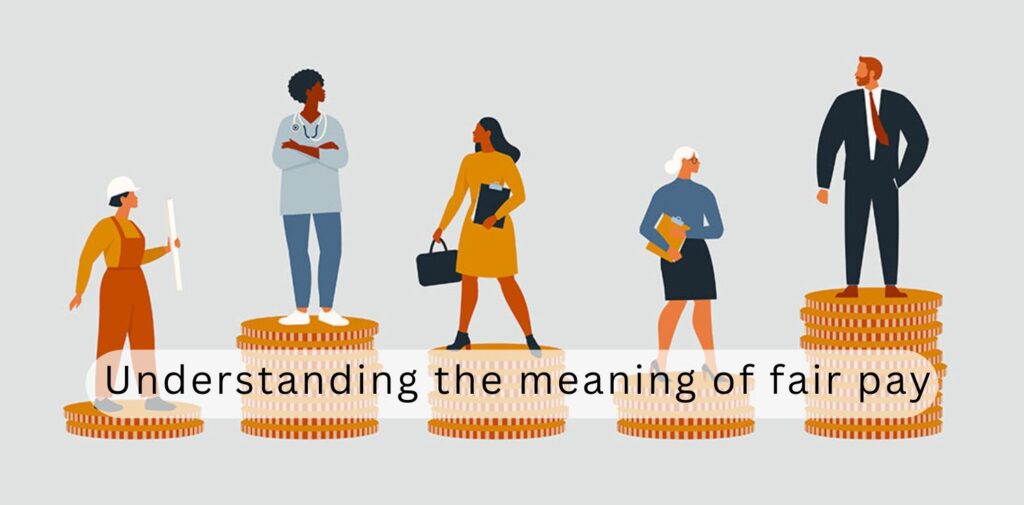
Fair pay means getting paid the right amount for the work you do. It is the wage or salary that matches your skills, experience, and the effort you put in. It also means being paid equally for doing the same work as others. For example, if two people are doing the same job and have the same skills and experience, they should be paid equally.
In India, many workers in unorganized sectors, daily wage earners, and even some private sector employees do not get fair pay. They are often paid less than what they should be getting. Fair pay is not just a demand, it is a right.
Why fair pay matters for workers and the economy
Fair pay is important for several reasons. First of all, it helps workers live a life of dignity. When a person gets paid well, they can take care of their family, educate their children, and live a healthy life. It also reduces stress and improves job satisfaction.
Secondly, fair pay boosts the economy. When people earn well, they spend more, which helps businesses grow. It also reduces poverty and income inequality. In India, where the gap between the rich and poor is wide, fair pay can help bring balance.
Thirdly, it’s creates a loyal and motivated workforce. Employees who feel they are paid fairly are more productive and less likely to leave their jobs. This helps companies reduce hiring and training costs.
Current challenges in achieving fair pay in India
India is a developing country with a large population and diverse job market. Because of this, achieving fair pay for all is not easy. There are many challenges.
One big problem is the unorganized sector. More than 90% of India’s workforce is in the informal sector, where there is no proper salary structure, no job security, and often no written contract. Workers in construction, domestic work, agriculture, and small factories often get very low wages.
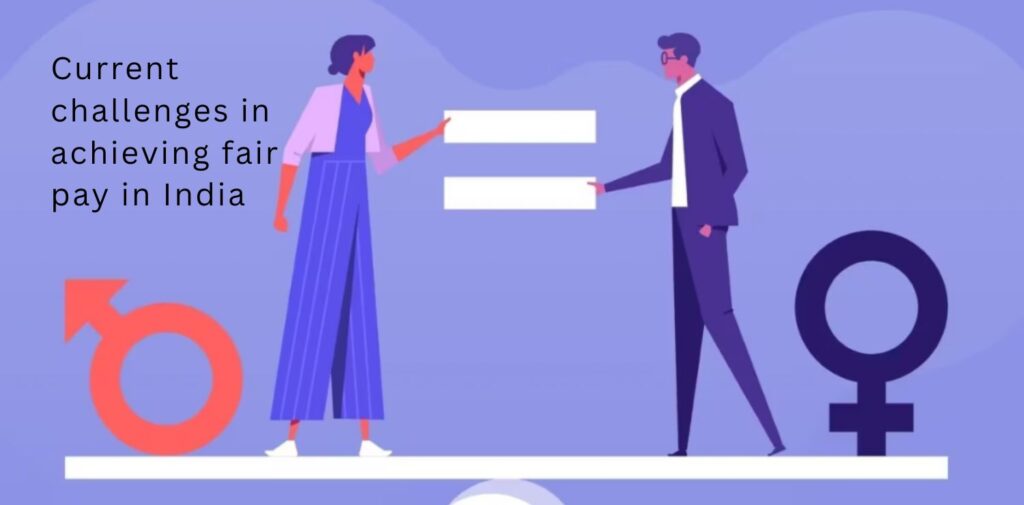
Another challenge is wage discrimination. Women often get paid less than men for the same job. There is also inequality based on caste, region, and educational background. Many times, people are not aware of their rights and do not have access to legal help.
Lack of enforcement is also a problem. Even though India has laws like the Minimum Wages Act and the Equal Remuneration Act, they are not always followed. Many employers find ways to avoid paying the legal minimum wage or delay payments.
Laws and government initiatives for fair pay in India
The Indian government has made several laws to protect workers and ensure fair pay. Some of the most important ones are:
Minimum Wages Act, 1948: This law ensures that workers get a minimum amount of pay fixed by the government. The rate varies from state to state and depends on the type of work.
Equal Remuneration Act, 1976: This law says that men and women should be paid equally for doing the same work or work of similar nature.
Code on Wages, 2019: This is a new law that brings together four wage-related laws. It aims to simplify rules and improve wage conditions for all workers, especially in the unorganized sector.
Besides these laws, the government has also launched schemes like MGNREGA (Mahatma Gandhi National Rural Employment Guarantee Act), which gives guaranteed employment and fixed wages to rural households.
Even with these laws, implementation remains weak. More efforts are needed to make sure workers are aware of their rights and that laws are followed strictly.
How to ensure fair pay for everyone
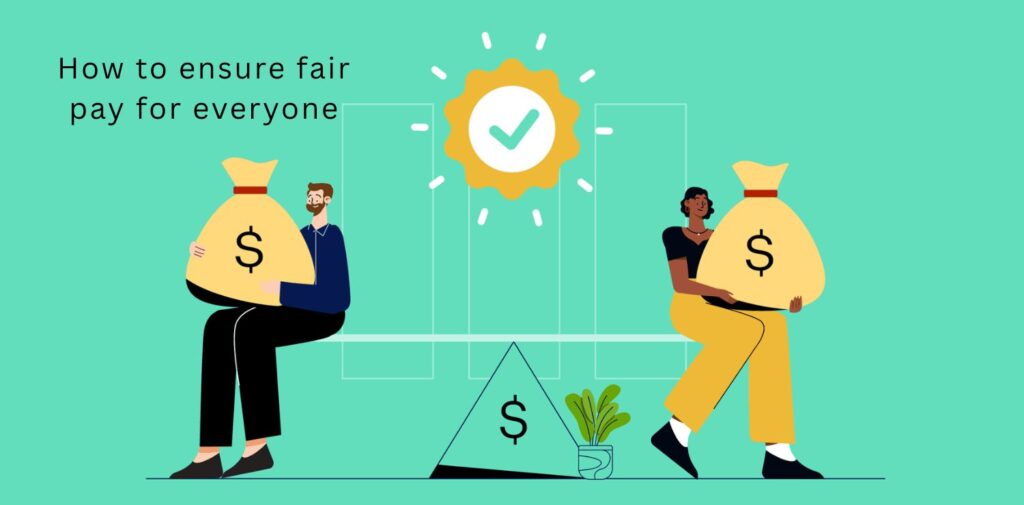
There are many steps that can be taken by the government, employers, and employees to ensure fair pay.
First, there should be strong implementation of wage laws. The government should regularly inspect workplaces, especially in the informal sector, to check if fair wages are being paid.
Second, more awareness programs should be conducted to educate workers about their rights. Many people do not know what the minimum wage is or that they have the right to equal pay. Awareness campaigns through radio, TV, and local community meetings can help.
Third, trade unions and worker associations can play a strong role. They can help workers fight for their rights and negotiate better pay and conditions.
Fourth, employers should adopt fair HR practices. Companies should follow transparent salary structures, give equal opportunities, and promote gender equality. A fair and supportive work culture benefits everyone.
Lastly, technology can be used to improve wage payments. Digital payment systems can reduce delays and ensure that wages go directly into workers’ bank accounts. It also brings transparency and record-keeping.
Conclusion: Moving towards a fairer future
Fair pay is not a luxury—it is a basic right of every working person. In a country like India, where millions work day and night to build the nation, they deserve to be paid fairly and treated with respect. While some progress has been made, a lot still needs to be done to make fair pay a reality for all.
It requires joint efforts from the government, businesses, trade unions, and citizens. Every worker should be informed, every employer should be responsible, and every law should be properly enforced. Only then can we build a more just and equal society where hard work is rewarded fairly.
By understanding and supporting the idea of fair pay, we take a big step toward improving the lives of millions and creating a stronger and more inclusive India.