

Pay disputes in the workplace are not uncommon. At times, employees may feel that their salary does not match the work they do or that there are discrepancies in the pay they receive. In such cases, it is crucial for employees to understand how HR departments in companies handle such issues. Resolving these disputes fairly and efficiently is essential for maintaining a healthy work environment and ensuring that employees feel valued.
In India, as in many other countries, pay disputes can arise for various reasons. It may be due to misunderstandings, miscalculations, or even intentional errors. Regardless of the cause, it is the responsibility of the Human Resources (HR) department to step in and mediate the situation. Let’s break down the process in a simple and easy-to-understand manner, so you can know how HR handles pay disputes and what steps are involved.
Understanding the Types of Pay Disputes
Before we dive into how HR deals with pay disputes, it’s essential to understand the different types of pay disputes that can arise in the workplace. Pay disputes are not always about salary being withheld or delayed. In fact, they can range from minor issues like incorrect deductions to more significant concerns like wage inequality. Here are some common types of pay disputes:
- Incorrect Salary Payment: Sometimes, employees may notice that their salary is lower than expected. This can happen if there has been a mistake in calculations, like an incorrect deduction or failure to account for overtime or bonuses.
- Unpaid Overtime: In many Indian companies, employees are required to work beyond regular hours. If overtime pay is not calculated correctly, this can lead to disputes.
- Discrepancies in Bonuses or Incentives: Employees might feel that they have not been paid their bonuses or incentives as per the company’s policies or performance targets.
- Equal Pay Concerns: Employees in the same role with similar responsibilities may have concerns about receiving unequal pay. Such concerns are often rooted in issues of fairness and can lead to disputes.
- Unclear Salary Structure: Some companies do not have a clear or transparent salary structure. In such cases, employees might not understand how their pay is determined, leading to confusion and disagreements.

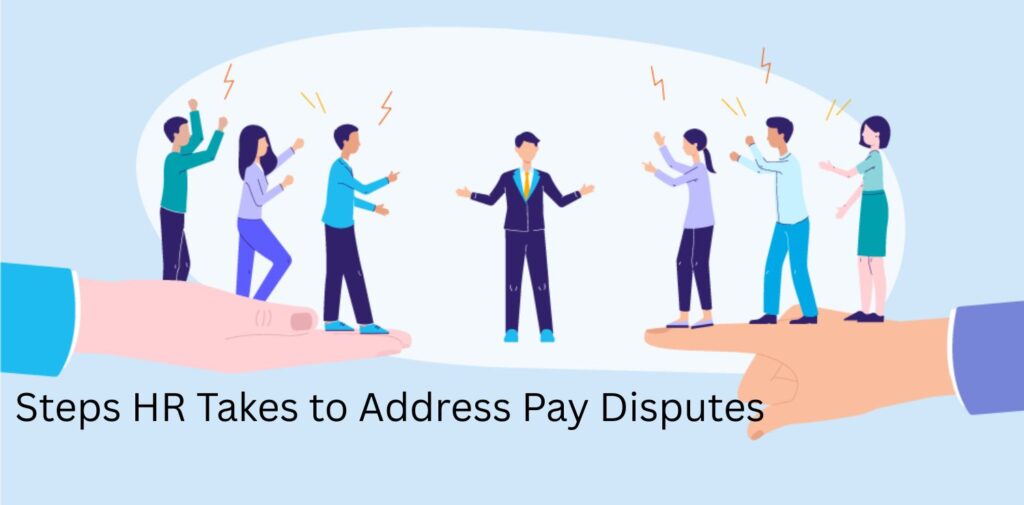
Steps HR Takes to Address Pay Disputes
When a pay dispute arises, HR plays a crucial role in resolving the issue. The process is typically handled in a systematic and step-by-step manner to ensure fairness and transparency. Here’s a detailed look at the steps HR takes to address pay disputes in Indian workplaces.
1. Listening to the Employee’s Concerns
The first step in resolving any pay dispute is listening to the employee’s concerns. HR representatives take the time to listen carefully to what the employee has to say about the issue. Whether it’s an issue with salary, bonuses, or any other aspect of compensation, HR must understand the problem clearly before taking any action. It is essential that employees feel heard and understood.
In India, where communication between employees and HR can sometimes be challenging, it is even more important for HR to provide a safe and welcoming space for employees to express their concerns.
2. Investigating the Issue
Once the employee’s concern is understood, HR will start the investigation process. This involves checking payroll records, examining salary structures, reviewing any overtime calculations, and verifying whether bonuses or incentives were correctly calculated. HR will also check if any legal requirements, such as minimum wage laws, were followed.
In India, where labor laws are strict, HR must be extra careful to ensure compliance with various regulations, such as the Payment of Wages Act, the Minimum Wages Act, and the Industrial Disputes Act. If the issue relates to a legal matter, HR may consult with legal advisors to ensure that the company’s policies are in line with the law.
3. Identifying the Cause of the Discrepancy
After the investigation, HR will identify the root cause of the dispute. Sometimes, the issue may arise from a simple clerical error, like a wrong entry in the payroll system. In other cases, there might be a lack of understanding between the employee and the HR team regarding company policies. Identifying the cause is essential for resolving the dispute and preventing similar issues in the future.
If the dispute involves multiple employees or affects a large group, HR may need to conduct a broader review of the payroll system to ensure that there are no systemic issues causing the problem.
4. Discussing the Resolution with the Employee
Once HR has investigated the issue and found the cause, they will discuss the resolution with the employee. If the employee’s concern is valid, HR will work to correct the mistake and ensure that any owed payments are made promptly. HR may also provide a written explanation of the resolution for transparency.
For example, if an employee was not paid for overtime work, HR may calculate the additional amount owed and arrange for the payment to be made in the next salary cycle. If the issue involves unequal pay, HR may review salary structures and ensure that employees are paid fairly in accordance with their roles and responsibilities.
5. Providing a Written Record of the Resolution
In many cases, HR provides employees with a written document detailing how the pay dispute was resolved. This written record may include an explanation of the issue, how it was investigated, and the final outcome. A written document serves as evidence that the dispute was addressed properly and that the employee’s concerns were handled professionally.
This transparency is important, especially in large organizations in India, where employees may feel that their concerns are not always taken seriously. Providing a written record can help both the employee and HR maintain clarity about the resolution.
6. Taking Preventive Measures
Once the issue is resolved, HR will often take preventive measures to avoid similar pay disputes in the future. This could include reviewing payroll systems, updating company policies, or providing additional training to staff involved in salary management. In some cases, HR may hold meetings or workshops to educate employees about the company’s pay structures and how pay is calculated.
In India, where many employees may not be familiar with the intricacies of pay calculations, such measures can go a long way in preventing confusion and dissatisfaction.
Legal Aspects and Employee Rights in Pay Disputes
In India, employees have certain rights when it comes to their pay. If an employee feels that their pay dispute is not being handled fairly by HR, they have legal recourse. The Indian government has established various labor laws to protect workers’ rights, such as the Payment of Wages Act, which ensures that employees are paid on time and in full.
If an employee believes that they have not been treated fairly, they can file a complaint with the labor commissioner or even take the matter to court in some cases. However, legal action should be considered a last resort after all internal dispute resolution methods have been exhausted.

Conclusion: The Importance of Fair Pay Practices
In conclusion, HR plays a vital role in handling pay disputes in Indian workplaces. Whether it’s due to clerical errors, misunderstandings, or pay inequality, HR must address the issue quickly and fairly. Clear communication, transparency, and an understanding of labor laws are crucial in resolving pay disputes effectively.
Employees should always remember that HR is there to help them, and approaching the department in a professional and constructive manner can often lead to a satisfactory resolution. On the other hand, employers must ensure that they maintain a transparent and fair pay system to avoid such disputes in the first place.
By understanding the process of how HR handles pay disputes, employees can feel more confident and informed about their rights and the procedures in place to protect them. A fair and effective dispute resolution process ultimately benefits both the employee and the organization, ensuring a happier and more productive workforce.