

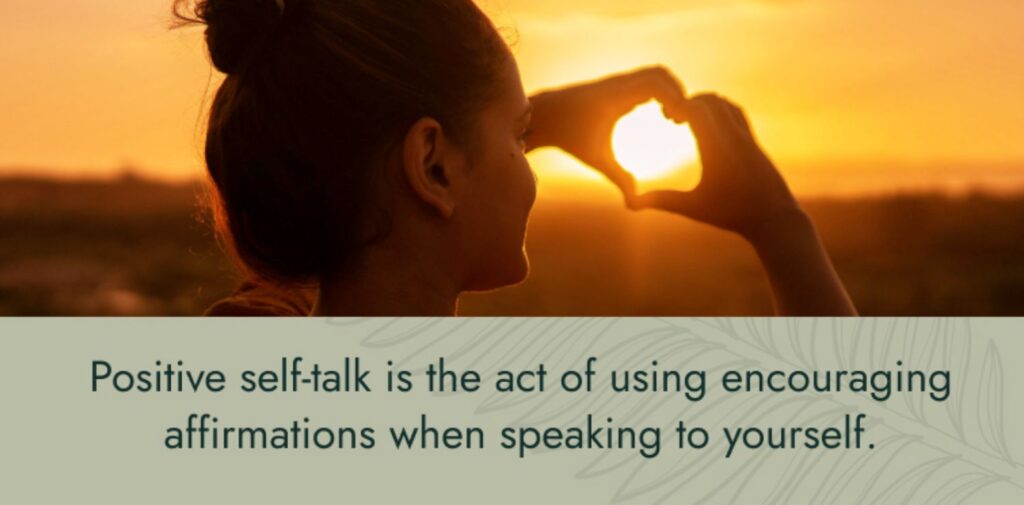
Have you ever noticed the little voice in your head? The one that talks to you when you make a mistake or when you are trying something new. That voice is your self-talk. It can be your biggest supporter or your worst critic. Positive self-talk means using kind, encouraging, and motivating words when you speak to yourself. It is one of the most powerful tools to improve your confidence, reduce stress, and achieve your goals.
In today’s busy and stressful life, especially in a country like India, where there is a lot of competition in studies, jobs, and even in daily life, positive self-talk can help you stay calm, focused, and happy. Let’s understand what positive self-talk is, why it is important, and how you can practice it in your daily life. daily life.
What is positive self-talk and why does it matter
Self-talk is the inner conversation you have with yourself. It happens all the time, whether you are aware of it or not. This inner voice can be positive or negative. Positive self-talk is when you say things to yourself like, “I can do this”, “I am improving every day”, or “I made a mistake, but I will learn from it”. Negative self-talk, on the other hand, sounds like, “I am not good enough”, “I always fail”, or “Nothing ever works out for me”.
Positive self-talk helps you stay motivated, confident, and emotionally strong. It can reduce feelings of anxiety, depression, and self-doubt. In India, where people often face pressure from society, family expectations, academic stress, and job challenges, having a positive mindset can make a big difference in how you handle these pressures.
When you practice positive self-talk regularly, you start believing in your abilities. You feel more in control of your life. Even in tough situations, you are more likely to stay hopeful and look for solutions instead of giving up.

The impact of self-talk on mental and physical health
Science and research have shown that the way we talk to ourselves can affect not just our mental health but also our physical health. People who use positive self-talk tend to have lower levels of stress. They are also less likely to suffer from depression or anxiety.
Positive self-talk can improve your immunity, lower your blood pressure, and help you recover faster from illnesses. This is especially important in India, where mental health is often ignored and physical health is seen as more important. But the truth is, both are connected. If you feel better mentally, your body also feels better.
For example, think of a student preparing for board exams. If he keeps telling himself, “I will never pass” or “I am not smart enough”, his mind will start believing it. He may feel anxious, unable to focus, and may actually perform badly. But if he says to himself, “I have studied well, I will give my best”, his brain feels more relaxed and focused, increasing the chances of doing well.
Common examples of negative self-talk in daily Indian life
In India, many people unknowingly use negative self-talk in daily conversations. Phrases like “Mujhse nahi hoga” (I can’t do it), “Main toh aisa hi hoon” (This is how I am), or “Mere naseeb mein hi nahi hai” (It’s not in my fate) are often said without realizing their impact.
These statements may seem normal, but they silently damage our confidence and self-belief. If a housewife thinks, “I am just a homemaker, what can I do?”, she might miss out on many opportunities to learn new skills, start a small business, or grow personally. If a job-seeker keeps thinking, “There are no good jobs out there for someone like me”, he might stop trying altogether.
By replacing these thoughts with more hopeful ones like, “Let me give it a try”, or “I will keep learning until I succeed”, the mindset begins to shift towards growth and possibility.

How to start practising positive self-talk
The good news is that anyone can learn positive self-talk. It takes some practice, but once you get used to it, it becomes a habit. Here are some simple ways to get started:
- Be aware of your thoughts: Start by noticing what you say to yourself in different situations. Are your thoughts helpful or harmful? Are you encouraging yourself or putting yourself down?
- Challenge negative thoughts: When you catch yourself saying something negative, pause and ask, “Is this true?” Most of the time, our negative thoughts are based on fear, not facts.
- Replace with positive statements: If you say, “I always fail”, replace it with, “I am still learning, and I will get better.” Positive statements don’t have to be overly optimistic, just realistic and encouraging.
- Use positive affirmations: Repeat simple and powerful statements to yourself every day like, “I am confident”, “I am doing my best”, or “I am worthy of success.” You can write them down, say them in front of the mirror, or even use them as your phone wallpaper.
- Surround yourself with positivity: Spend time with people who uplift you. Watch inspiring videos, read motivational books, and stay away from too much negativity in the news or social media.
- Be kind to yourself: Treat yourself like you would treat a friend. If a friend failed a test, you wouldn’t say, “You’re useless.” You would say, “It’s okay, you’ll do better next time.” Speak to yourself the same way.
Positive self-talk for different stages of life in India
Positive self-talk is helpful for everyone, no matter their age or situation. Here are a few examples for different people in India:
- For students: “I am capable of learning anything if I give it time and effort.”
- For working professionals: “Every challenge is an opportunity to grow in my career.”
- For parents: “I am doing my best for my family, and that is enough.”
- For elders: “I still have so much wisdom and love to share.”
- For homemakers: “My work matters and I have the power to inspire others.”
When people in each group begin to use more positive words with themselves, it creates a ripple effect in families, schools, and even in workplaces.
Conclusion: Change your words, change your life
Your mind listens to everything you say to yourself. Positive self-talk is like planting good seeds in your mind. Over time, those seeds grow into strong trees of confidence, peace, and success. In a country like India, where daily life can be full of challenges, positive self-talk is not just helpful – it is necessary.
Start small. Begin with just one kind thought a day. Slowly, increase the number of positive things you say to yourself. You will be surprised at how much your life can change just by changing the way you speak to yourself.
You are always with yourself, 24 hours a day. Make that company kind, strong, and positive.